terça-feira, 1 de março de 2016


sexta-feira, 9 de outubro de 2015
Bicicletas dobráveis / desmontáveis de alto desempenho | High performance Foldable / Separable bikes!
Bicicletas dobráveis / desmontáveis de alto desempenho
Há pouco tropecei nesta suposta novidade do mundo ciclístico: uma dobrável de alto desempenho: a Vello Bike!
Imediatamente me lembrei que há quase 40 anos Sir Alex Moulton (das bicicletas Moulton: http://www.moultonbicycles.co.uk) já tinha criado uma bicicleta muito semelhante, de alta performance, em 1979. Não sei se essas edições já eram desmontáveis, mas sei que as mais recentes, deste século XXI, são.
Neste segundo vídeo (apenas um de entre tantos que estão disponíveis na internet) podemos ver como é eficiente a Moulton, ultrapassando o pelotão e distanciando-se deste!
ENG ---------------------------------------------------------------------------------------------------------
High performance Foldable / Separable bikes!
I recently stumbled on this supposedly novelty: a foldable high performance bike: the Vello bike!
On this second video (among so many others on the internet), you can watch it in action, taking on the peloton and riding away!
Há pouco tropecei nesta suposta novidade do mundo ciclístico: uma dobrável de alto desempenho: a Vello Bike!
Imediatamente me lembrei que há quase 40 anos Sir Alex Moulton (das bicicletas Moulton: http://www.moultonbicycles.co.uk) já tinha criado uma bicicleta muito semelhante, de alta performance, em 1979. Não sei se essas edições já eram desmontáveis, mas sei que as mais recentes, deste século XXI, são.
Neste segundo vídeo (apenas um de entre tantos que estão disponíveis na internet) podemos ver como é eficiente a Moulton, ultrapassando o pelotão e distanciando-se deste!
High performance Foldable / Separable bikes!
I recently stumbled on this supposedly novelty: a foldable high performance bike: the Vello bike!
I immediatelly recalled the Moulton high performance bikes Sir Alex Moulton has built since 1979 (http://www.moultonbicycles.co.uk)! I don't know if they always were separable or not, but for sure, the recent models are!
On this second video (among so many others on the internet), you can watch it in action, taking on the peloton and riding away!
quarta-feira, 1 de julho de 2015
C2C - Coast to Coast - um local para a aventura
Ora vamos lá a isto, esta é a minha primeira experiência a escrever num
blog por isso por favor tenham paciência comigo. Ainda por cima, também já não
escrevo um texto decente em português há uns bons anos pois emigrei para
Inglaterra em 2011, antes do famigerado acordo ortográfico. Consequentemente,
este texto está escrito em português pré acordo. Assim, as criancinhas/jovens
que leiam isto podem ter dificuldades em seguir o texto.
O Bycycling2012blogspot pediu-me para descrever a experiência que é a Coast to Coast, (C2C para os locais que gostam de abreviar tudo). A C2C é provavelmente a rota ciclística mais conhecida do Reino Unido e como o nome indica é uma travessia costa a costa. Sendo uma ilha, há diversas travessias em vários pontos, mas esta é uma das favoritas por diversas razões que explico abaixo.

Mapa das ciclovias que compõem a C2C
Inglaterra é um país excelente para o ciclismo. Tem um sistema de ciclovias
que faz inveja a qualquer país do mundo. Chamam-lhe National Cycle Network (NCN) e consiste numa rede de ciclovias que
atravessa o pais de lés a lés providenciando aos ciclistas rotas com poucos ou
nenhuns carros onde o foco é o ciclista (ver mais sobre a NCN em http://www.sustrans.org.uk/). A C2C aproveitou-se desta infrastrutura para
desenhar a sua própria rota.

Ciclovia à saída de St Bees – dá gosto ciclar assim!
A C2C para ciclistas foi criada em 1994 tendo sido inspirada por uma rota
pedonal traçada por Alfred Wainwright em 1973. A rota original tinha 309 kms
começando a Oeste em St Bees e acabando a Este em Robin Hood’s Bay enquanto que
a rota ciclistica mais usada começa em Workington acabando em Tynemouth
compreendendo 230 kms. Diz a tradição
que temos de levar um pequeno seixo connosco que depois depositamos na margem
oposta.

O pequeno calhau apanhado na praia de St Bees.

O pequeno calhau na praia de Robin Hood’s bay.
(como
cheguei numa maré baixa tive de caminhar uns bons 500 m
para deixar a rocha mesmo
em algo que se parecesse mar)
A C2C consegue acomodar diversos níveis de fitness sendo possível de fazê-la num dia (para os completos fanáticos),
2 dias para os razoavelmente em forma, 3 dias para o comum mortal apreciando as
vistas e 4 ou mais dias para quem utiliza a rota como um roteiro gastronómico
ou umas férias bem relaxadas.
A principal atracção da C2C reside no facto de passar pelas mais belas
zonas de Inglaterra. Primeiro o Lake
District, com uma beleza natural apenas ultrapassada na Escócia. Depois os North Pennines fazendo-nos pensar que
afinal Inglaterra não é assim tão populada e exibindo uma extensão considerável
de área quasi virgem.
Em termos logísticos fazer a C2C tem os seus desafios. Principalmente como
chegar ao local de partida e como sair do local de chegada. Os famosos caminhos
de ferro Ingleses não são os mais fáceis de combinar com a bicicleta por isso conseguir
apanhar um comboio com uma bicicleta é mais um caso de sorte do que de bom
planeamento e sabedoria. Não há pré-marcações e o comboio leva no máximo 2
bicicletas (independentemente do número de carruagens!).
Talvez melhor alternativa seja a de alugar um carro
deixando-o no ponto de partida e depois fazer o mesmo á chegada. Infelizmente
esta opção limita a escolha do local de partida e chegada. Dos pontos de
partida apenas Workington tem empresas Rent-a–car.
Pode-se sempre ciclar daí até ao
ponto de partida desejado e depois então começar a rota oficial. À chegada, em
Tynemouth (junto a Newcastle) ou em Sunderland há várias empresas rent-a-cars por isso esta opção acaba
por ser bastante prática para o regresso. As rent-a-cars em Inglaterra são relativamente baratas e por um dia de
car rental com drop-off a 300 kms de distância do ponto de recolha cobram cerca de
£50 (cerca de €70 à cotação actual).

Em relação à estadia a coisa é mais fácil. Existem inúmeros sítios para ficar e com excelentes condições para as pessoas e para as nossas queridas bicicletas. Aqui pode-se ficar desde hóteis de luxo a simplesmente acampar. Talvez o melhor compromisso sejam as pousadas que estão preparadas para os ciclistas com um nível de conforto bastante bom e sem o risco de que a chuva ou vento nos leve a tenda. Acreditem que independentemente da altura do ano em que escolherem fazer a C2C o mais provável é que chova, faz parte da experiência... Por isso acampar é uma opção que requer a devida consideração. Das duas vezes que fiz a C2C acampei na primeira vez e na segunda usei pousadas. Acampar é a opção mais barata com cerca de £5 a £8 por noite, mas são normalmente apenas quintas que decidiram abrir um dos campos para a malta montar a tenda. Ter duche e uma sanita só nos parques mais requintados. As pousadas custam entre £20 a £30 por noite... mas incluem pequeno almoço e o tão desejado duche!


No caminho há algumas opções
off-road para quem assim preferir… pois claro eu prefiro!
(aliás
há uma rota inteiramente off-road mas engloba, nalgumas secções, carregar a
bicicleta às costas. Eu sou todo por BTT, mas Btt-alpinismo não é bem para mim).

À saída de Alston após a subida mais dura da jornada

Não nos devemos esquecer de parar de vez em quando
para beber um chá
e apreciar a paisagem, afinal, a C2C é sobre a viagem, não
sobre o destino
Sobre
o caminho propriamente dito, é bastante acidentado com um total de 3300m de
acumulado. Looking on the bright side,
com belas subidas vêem belas vistas e aquela sensação de que o que sobe também tem
de descer. Assim, um desafio interessante é o de como dividir o percurso de
forma a equilibrar o acumulado. Fica a sugestão para o percurso feito em 3
dias:

Perfil topográfico
Dia 1

Dia 2

Dia 3


1900 feet não é muito (não chega a 600 metros)… mas
após 8 horas a ciclar
com vento contra acreditem que parecia que estava a
atravessar os pirinéus

Parte da ciclovia à saída de Keswick, uma estrutura em
madeira que nos leva sobre o rio, delicioso

Um dos muitos pontos para aproveitar a vista,… e beber
mais um
cházinho que a maior parte das vezes calha mesmo
bem para nos aquecer
mais um pouco
Como disse acima, o caminho é feito maioritariamente utilizando quer ciclovias
exclusivas para bicicletas quer vias secundárias onde apenas tractores e alguns
carros de pessoas locais passam. Coisa mais tranquila é difícil de encontrar. O
maior tráfego que vão apanhar são ovelhas e vacas junto ás bermas da estrada a
pastar. Isto soa mais a interior transmontano do que busy England mas é assim.
Também, ao contrário do que se pensa, os Ingleses são simpáticos! Onde quer
que parem podem pedir água ou direcções a quem quiserem. Nesta parte mais
relaxada do país todas as pessoas estão disponíveis para ajudar e eles adoram
dois dedos de conversa com totais desconhecidos. Vocês podem é não perceber o
que vos dizem... são precisos alguns anos de treino para perceber o sotaque de
pessoas nesta região (quase Escócia) e quando chegarem a Newcastle...esqueçam,
o Jordi accent é engraçado mas mais
ou menos como Açoreano cerrado (desculpem-me os Açoreanos). Não é surpresa que
a maioria das piadas inglesas incluem alguém de Newcastle (ou Birmigham) como o
bobo da anedota. Tenham paciência pois é muito boa gente e mais cedo ou mais tarde
lá percebereis o que vos dizem.
Bem, a título de conclusão, a C2C é uma excelente
experiência. Oferece paisagens fantásticas com desafios interessantes. Se
gostam de campo e de prados verdejantes então não há que enganar. O caminho é
tão variado que fazê-lo em alturas diferentes do ano parecem diferentes
caminhos. Quanto a mim… já estou a planear a próxima C2C, vai ser ainda este
ano!
quinta-feira, 25 de junho de 2015
Livro - "Miles from nowhere - a round the world bicycle adventure"
Sobre a Autora
Tal como vos tinha prometido (aqui e aqui), finalmente partilho convosco esta mensagem sobre um livro de cicloturismo escrito por uma mulher, Barbara Savage.
Esta mulher decidiu partir à aventura em 1977, acompanhada daquele que era, então, o seu namorado (Larry) e fazer a volta ao mundo em bicicleta, tendo viajado juntos por 25 países, incluindo Portugal (a que ela chamou o Paraíso Português).
Esta mensagem tem um sabor um pouco agri-doce, porque, ao contrário da Nancy Sathre-Vogel, de que vos falei neste outro post, a Barbara já não se encontra entre nós, tendo falecido já depois da sua odisseia planetária, vítima de um acidente com um automóvel (truck) bem perto da sua casa, enquanto treinava para uma prova de triatlo.
Nós só temos acesso ao livro porque o Larry (que entretanto se tinha casado com ela) decidiu publicar o livro que a Barbara estava a preparar (ou, melhor, tinha já concluído, mas ainda não o tinha dado à estampa) quando foi vitimada.
A publicação deste livro foi, portanto, uma forma de prestar homenagem à memória desta mulher, pelo seu marido.
Pelo que li, mesmo no final do livro, o Larry chegou inclusivamente a criar um prémio para publicações de novos autores, o "The Barbara Savage Miles from Nowhere Memorial Award, supporting unpublished books by first-time authors was established in 1990".
Sobre o Livro

Este livro representou para mim (que na altura não sabia que a Autora tinha morrido de forma tão infeliz) uma verdadeira viagem, primeiro pelo nosso país do final da década de 70, depois por países mais exóticos como o Egipto (em que a Barbara e o marido não tinham um momento de paz e de privacidade), o Nepal, a Índia e a Nova Zelândia, entre muitos outros.
A técnica de escrita, a fraseologia utilizada e o próprio conteúdo do relato são mesmo muito bons, conseguindo, por um lado, oferecer uma perspectiva realista da viagem e, por outro lado, manter sempre um ambiente muito enérgico e bem disposto ao longo de todo o livro.
Cada vez que "abri" o livro (entre aspas porque o li em versão Kindle) fui transportado para a viagem deles por este nosso planeta em que somos todos verdadeiramente iguais - irmãos.
E, quanto mais leio e mais faço cicloturismo mais me convenço de que a bicicleta é o meio de transporte mais inocente e genuíno e é considerada pela maioria como o meio de transporte mais inofensivo. Uma bicicleta carregada de material de viagem permite-nos alcançar o lado bom das pessoas que connosco se cruzam.
O William Weir, de que vos falei aqui, já instava o seu incrédulo amigo a "Let's initiate kindness" quando era mesmo necessário um local para pernoitar...
Através deste livro "Miles from nowhere - a round the world bicycle adventure" escapei do meu quotidiano, pedalei pelos Himalaias acima e estive no restaurante Tailandês em que o dono não quis manter o preço da refeição inicialmente acordado com um seu empregado, e que, no final de um longo regatear de preço, esteve quase a perder as estribeiras com uma faca enorme na mão e a olhar fixamente para o casal e para o outro cicloturista que os acompanhou (o Geoff)... (Já agora, acho que fizeram bem em deixar o troco com o dono do restaurante e sair rápida e discretamente dali!)
É uma leitura inspiradora, bem disposta e bem escrita (o que nem sempre sucede neste tipo de publicações).
A versão que eu li é em Inglês e ainda não encontrei qualquer versão traduzida para Português (o que é uma pena, porque o livro é mesmo muito bom!).
Se já tiverem lido o livro ou se o lerem na sequência desta mensagem, deixem, por favor os vossos comentários aqui!
Boas leituras e boas pedaladas.
quinta-feira, 18 de junho de 2015
Rose XEON RS 5000, the review (Finally!) - (Pt 3 of 3)
De acordo com o prometido, aqui fica a última mensagem feita pelo meu amigo P., sobre a Rose XEON RS 5000.
Na próxima quinta-feira, publicarei uma mensagem sobre um outro livro de cicloturismo e, na subsequente, uma mensagem sobre uma rota de cicloturismo mundialmente famosa: a Coast to Coast, no Reino Unido, feita por um outro amigo meu!
Boas leituras!
**** **** ****
Before getting into the actual review, I mention that Rose make all types of bikes and use a wide range of materials. Road bikes come in either aluminium or carbon fibre. The XEON RS range is a ‘cousin’ to the CRS range which, as suggested by the letter ‘C’, is made of carbon fibre. All reviews suggest that the XEON CRS and Rose’s other carbon fibre bicycles are also seriously worth considering.

It may be of interest to list the spec
of my bike. This follows some customisation, notably the wheels:
Frames
|
7005
T6 Ultralight Aluminium, triple-butted, anodized black, 57cm
|
|
Fork
|
XEON
Modulus Fullcarbon 11/8"-1.5", UD-carbon
|
|
Wheels
|
Mavic
Cosmic Carbone SLS WTS
|
|
Chainset
|
Campagnolo
Chorus 36/52, 11-speed, carbon, 175mm
|
|
Rear Derailleur
|
Campagnolo
Chorus 11-speed
|
|
Sprocket
|
Campagnolo
Chorus, standard, 12-27
|
|
Shift Brake Levers
|
Campagnolo
Chorus 2-/11-speed, black
|
|
Chain
|
Campagnolo
Chorus 11-speed
|
|
Front Derailleur
|
Campagnolo
Chorus Chorus 2-/11-speed
|
|
Rim Brake
|
Campagnolo
Chorus D-Skeleton
|
|
Seat Post
|
Ritchey
WCS Carbon Monolink FlexLogic, black, 27,2mm
|
|
Saddle
|
Selle
Italia SLS Kit Carbonio Monolink, black matt/middle stripe black matt,
Standard
|
|
Handlebar Tape
|
fi´zi:k
Microtex, black + fizik logo
|
|
Stem
|
Ritchey
WCS 4 Axis, black/matt, 110mm
|
|
Spacers
|
Xtreme
Carbon Spacer 15mm(1x5mm+1x10mm)
|


The XEON RS range is made of aluminium in Taiwan. Up until 2014 (i.e. including the bike I am riding) 7005 / 7051 aluminium was used. [I believe the 2015 range is made of 6066 aluminium which allows for thinner tube walls and therefore lighter frames]. This resulted in my 57cm frame weighing 1,205g (my own measurement), light and competitive with some similarly priced carbon fibre frames. Rose claim that the 2015 6066 version is very close to 1 kg for the frame; that is impressive! My opinion is that bikes made in the Far East should not be dismissed. It is true that you can get some crap, but it must also be kept in mind that the Far East, particularly Taiwan (courtesy of Giant bikes) has decades of experience is mass bike production.
The fork is Rose’s own design and is shared with the CRS range. It is a very light, full carbon steerer, 330g fork. As is standard these days (and f**ck you very much bicycle industry for forever changing fork steerer widths etc and other component sizes ) 1.1/8 inch (28.6 mm) at the top and 1.1/2 inch (38.1 mm) at the bottom. Badmouthing the cycling industry aside, I actually like this head tube sizing. I ride 1 inch and 1 1/8 inch bicycles. I do feel that the thinner at the top and lower at the bottom head tube offers that little bit extra in stability. Of course this also assumes that everything is assembled solidly and competently. This is the case on the RS.
The riding experience is much improved if the front end of the
bicycle is solid and responsive. To explain this is less jargonistic terms,
imagine moving at speed on a long descend with bends. The narrower diameter
head tubes often add a sense that the handlebars and fork are too bouncy, not a
good feeling when going fast. Additionally, the extra tube width helps to make
steering more responsive. On the RS you definitely get the feel that as soon as
you turn the handlebars there is a response. Whatever the scientifically
measurable advantages the RS’ head tube adds to the ride, it surely adds a
confidence boost associated to steering which is invaluable.

The RS has very thin seat stays. This is
nothing new in the bicycle industry and is widely used by a variety of
manufactures, particularly on carbon fibre frames. See, for example, various
Cervelo and BMC models. I find it optically pleasing. More importantly, it is a
good way to add – that bastard of a word – compliance. Real bicycle science
shows that some flexibility in the seat stays does not measurably affect the
efficiency of the power transfer which makes your bike move forward. I am not
sure how this works, and I won’t pretend too much that I do.

However, make the rear end of the bicycle too stiff and the machine will bounce on the road. The more time spent bouncing, the less time the rubber on the tyres is in contact with the road surface propelling your forward. Long story short, and before I get lost in my own pseudo-scientific explanations about bicycles, the RS is a very comfortable ride. No doubt in my mind that the seat stays add to this experience. I can confidently compare the ride to good quality carbon fibre frames and equally confidently say that it is more comfortable than my old aluminium Bianchi.


However, make the rear end of the bicycle too stiff and the machine will bounce on the road. The more time spent bouncing, the less time the rubber on the tyres is in contact with the road surface propelling your forward. Long story short, and before I get lost in my own pseudo-scientific explanations about bicycles, the RS is a very comfortable ride. No doubt in my mind that the seat stays add to this experience. I can confidently compare the ride to good quality carbon fibre frames and equally confidently say that it is more comfortable than my old aluminium Bianchi.

Another important contributor to the RS’
comfort is the 27.2mm seat post. The bicycle industry has gone up and down with
the diameter of this part of a bicycle. Different diameters have different
merits or are necessary depending on the rest of the structure, and / or
intended use of the bike. However, the easiest way to put some ‘compliance’
under your backside is to have a smaller diameter seat post. Wider diameters
tend to be stiffer, in an area where too much stiffness is not helpful.


The Campgnolo Chorus 11 is an excellent groupset and certainly a well-matched companion to the RS frame. With the Chorus you get all the functionality of the more expensive Record / Super Record groupsets. The only tangible difference is the weight. There are about 220g difference between the Super Record and Chorus. The weight saving will cost you an extra EUR 1000. You decide if that is necessary. The great thing about the top three groupsets offered by Campgnolo are that you can shift-up three gears and shift-down three gears if you need it. I went for a 52/36 crankset, however, 53/39 and 50/36 were available. All my other bikes had 53/39. Pushing past the middle part of my 30s, and starting to possibly lose that extra spring in my legs, I thought that a 52/36 would be an appropriate ‘step-down’.
Coupled with the 12-27 eleven speed cassette this provides me with
ample options for all kinds of terrain. In an ideal world I would have a 53/36
or I would own a 53/39 and a 50/36 crankset and swap as needed. The latter is
possible, but not a cost I want to bear at this time. The former has been
tried, but achieving a 53/36 ratio is technically challenging. I prefer to go
riding rather than spend (more) time on fiddling with my front derailleur. (PS: Shimano’s and Campagnolo’s new four-arm
cranksets now mean that you no longer have to swap the entire 53/39 for a
compact crankset. The BCD of the four-arm cranksets allows one to swap standard,
semi-compact and compact ratios on the same cranks simply by changing
chainrings. Much cheaper, assuming you already have a four-arm crank).
However, let us not forget the
all-important (if not most important) contribution the wheels have. As indicated
in the bike spec listed earlier, I got my bicycle with an upgrade of Mavic Cosmic Carbone SLS WTS,
compared to Campagnolo Zondas which come with the RS 5000 as standard. This pair
of Mavics is a deep rim (52mm)/ aero
rim. It is the lowest priced Mavic aero wheelset but still retails at around
EUR 850 to UER 1,000. As the name suggests, these wheels have some carbon fibre
on them, but are not entirely made of this; alloy plays the most vital
structural role. I will not dwell on the Mavic SLS WTS in this review. I will
say that they noticeable add speed, particularly on flat ground. The down side,
is that they are stiff and also add a fair amount of bounce when the road
surface is not very smooth. This has an effect mostly on the comfort of the
ride. Unless these wheels are used on endless kilometres of very rough and
badly maintained tarmac, the net speed gain will be much greater than the loss
of speed caused by bouncing around.
For
the sake of comparison, I have also extensively ridden the RS with a pair of
Campagnolo Neutron Ultra (usually retail between EUR 600 and EUR 700. I bought
these in late 2013 and, ever confusingly, are the 2014 model. These wheels are
the best I have ever had. They are shallow rim (23mm deep), lightweight (less
than 1,500g without tyres and inner tubes) and bomb-proof. They have a carbon
fibre hub while the rest of the construction is alloy. Most importantly, you
can effortlessly get them to start rolling and similarly effortlessly get them
to continue spinning. The Mavic SLS WTS will keep help me to move fast on the
flatter parts. However, when you have proper mixed terrain (for those in the
local area in Portugal, throw Montejunto in the mix) the Neutron Ultra will
spin fast uphill as well as on the flat. Additionally, the Neutron Ultra
strikes a good balance between stiff and comfortable. Descend as fast as you
can or accelerate off the saddle without feeling the front wheel flexing
excessively (the stiff part). When I added the Neutron Ultra’s to the RS the
bicycle was able to eat-up and smoothen out those rougher roads, the ones which
years of neglect have left full on holes, cracks and bumps.
I
should point out that the reason I did not go with the Campgnolo Zonda offered
with the RS 5000 at no extra price was the fact I already own a pair which I
use on the Bianchi. Again, this is not the place to review the Zonda’s but for
the price of EUR 300 to EUR 350 for which they usually retail for, you could
not ask for a better wheelset.
Other
small bits and pieces that I like on the RS include:
-
A bridge between the chainstays, close to the bottom bracket: This is not a new trick but one
which carbon fibre has rendered unnecessary. You tend to see such bridges on
older steel bikes. In older bikes this added piece of metal also served as an
anchoring point for mudguards. As mentioned earlier, the RS is designed for
racing and is not designed to take mudguards. Those who don’t like having a wet
arse will be disappointed.


-
For Weight Weenies: If you like spending money on getting less (weight), a light pair of
wheels, and carbon stem / handlebars will easily take the weight of the whole
bike to closer to 6kg. However, and this applies to most bikes the majority of
us buy, the super-light wheels alone may cost close to or more than the bike
itself.
So
what are the bad parts of the RS and specifically the RS 5000? Some, but none
too important in my opinion. I list them below:
-
The Monolink saddle system: This is the option I went for; you can get the normal two-rail saddle
if you want. The Monolink is easy to adjust, easier than the traditional seat
post / saddle system. It is also, allegedly, more aero. This is a dubious claim
and not often repeated by wiser people. Too much happens to the air before it
reaches the seat post / saddle joint to make a measurable difference to the
aerodynamics. My gripe is that the Monolink system is more uncomfortable. I
think that the traditional way a seat attaches to a seat post (i.e. using two
rails) allows for more flex and hence a more comfortable ride. Also, as the
market is now, should I break the seat post and or saddle, replacements will
come at a significantly higher cost and difficulty to source. Not to mention
that if you are the happy owner of many bikes, you cannot simply swap-in your favourite
two-rail saddle.


-
It is not carbon fibre: I know that this will be a sticking point for
some. Get over it!
So how does it ride after almost 5,500km?
Amazingly, thanks for asking. I think
describing ‘the feel’ of any bike is highly objective. However, I have never
had a bad moment on the RS. I’m a tall
(1.89m / 72kg) rider and ‘relax’ when I feel that I’m riding aggressively. No
problem for the RS. Fast descends, steep climbs, flat roads, bad roads, good
roads, wet roads etc. all handled aptly. A good bike gives the rider a robust
base and solid feeling; which allows one to push their limits. The RS does this
more than capably. For example, if I am riding a steep uphill, out-of-the-saddle
and full power, I know that as much power as I can hope for is being used to
push the bike forward, and not twisting the rear end, resulting in the brake
pads rubbing on the wheels or even the
wheels touching the seat stays. Going downhill also feels solid; no wobbles and,
as indicated before, the steering is responsive and predictable. Going for flat
road speed? My experience is that on a Sunday morning, before you know it, you
will be overtaking a bunch of fellow cyclists who will be hanging on to your
rear wheel. Assuming that you are physically up for it, the RS will ensure that
none of them will be able to take a turn at the front. Of course that might be
seen as a bad thing; who does not like drafting? But I take infinite pleasure
in having unwanted rear-wheel guests - riding carbon fibre worth as much as
small cars or big motorbikes – who are barely holding on and huffing/puffing
for dear life. (Note to all local
riders: If you want to draft behind someone at least offer a friendly ‘ola’;
it’s a Sunday ride in the Oeste, not the TdF. Leave you silent ‘game-on’ faces
for another time! And please take a turn in the front!)
I’m sure that the RS would also perform
well as a grandfondo / sportive bike. The comfort is there and you can adjust it
to a less race-prone position fairly easily. However, I would say that there
are more directly applicable choices in the market (some from Rose Versand
even) for those wishing to enjoy less furious, long rides.
quinta-feira, 11 de junho de 2015
Why Aluminium and Why Rose Versand (Pt 2 of 3)
Car@s leitor@s, como tínhamos combinado (aqui e aqui), publico agora o segundo de três posts do meu amigo P.
Para quem estava mais distraído, a primeira mensagem está aqui.
Espero que apreciem a leitura. Eu sei que eu gostei muito.
Making My Way Towards Aluminium
Para quem estava mais distraído, a primeira mensagem está aqui.
Espero que apreciem a leitura. Eu sei que eu gostei muito.
Making My Way Towards Aluminium
In early 2014 it became apparent that my
also aluminium frame / carbon fork Bianchi Via Nirone 7 C2C was simply not
enough bicycle for me anymore. This despite the countless upgrades which
resulted in a staggering weight reduction from the original 9.9kg to around
8.6kg. I needed more; more accurately I needed less weight, more stiffness,
bigger bottom bracket, wider head tube, etc. etc.
Big “f**ck you” to the
bicycle industry for helping me believe I needed (and will always need) all
your quasi-scientific improvements. Yes, it takes two to tango, and I accept this
dance despite my intelligence and ability to spot a sales-pitch from a mile (or
1.6km) away. But I digress. Point is I wanted a new bike and wanted one which
offered best value for money. This is where the ability to partially ignore
bicycling marketing ‘science’ was useful. It quickly became apparent that a
well-designed and well-made quality carbon fibre frame comes at a cost. The
cost is that you will need to sacrifice the spec of your bicycle components. Mr
Bontrager (same dude who makes your bicycle components of the same name), once
famously said "strong, light, cheap. Pick two”. I wanted it all. It seemed
obvious that a carbon fibre frame would have to wait for another day.

To give an example of what was available in the market, a EUR 2,000 BMC Teamachine, with a Shimano 105 groupset (with all due respect to what are excellent components for their price range) and equally entry-level wheels, where not enough for me. I did look at the BMC Teamachine with the aforementioned spec. However, I did not want to spend that amount of money only to end up with something that was as heavier than my post-upgrade old Bianchi. Moreover, my irrational side has a love affair with Campagnolo; I wanted that, in fact I NEEDED it! And speaking of Campagnolo, Veloce, Centaur or Athena was not going to be right. Ideally it would have been Record, Super or just the plain version. That said, Chorus is only 200 grams or so heavier and with all the functionality of its more expensive brothers.

Picture from the manufacturers website: http://www.rosebikes.com/
To give an example of what was available in the market, a EUR 2,000 BMC Teamachine, with a Shimano 105 groupset (with all due respect to what are excellent components for their price range) and equally entry-level wheels, where not enough for me. I did look at the BMC Teamachine with the aforementioned spec. However, I did not want to spend that amount of money only to end up with something that was as heavier than my post-upgrade old Bianchi. Moreover, my irrational side has a love affair with Campagnolo; I wanted that, in fact I NEEDED it! And speaking of Campagnolo, Veloce, Centaur or Athena was not going to be right. Ideally it would have been Record, Super or just the plain version. That said, Chorus is only 200 grams or so heavier and with all the functionality of its more expensive brothers.

Several hours, probably too many, were spent searching the web for this mythical bike. As suggested earlier, it was quickly apparent that a carbon fibre frame was drifting far from my budgetary ambitions. Responsibly, for the sake of my children and wife as I like to think, I had to stick to the budget. EUR 3,500 would have got me that carbon fibre, at least-Campagnolo Chorus etc. However, that extra EUR 1,000 was also several months of child expenses, and other family costs, both essential and not. I could not be selfish, even though for – the record – my family, probably seeing my budgetary anguish, would not have opposed me spending more than the budget. I persisted. Sometimes it’s important to stick to a plan even when most mainstream indications suggest that it is pointless.
Raving reviews of Canyon’s (also a
German bike company) aluminium range and equally positive reviews of the
Kinesis (a British company) Aithein aluminium frame caught my attention. These
bikes not only were light but were also good looking, often a compromise when
it comes to making an aluminium frame. They were also on the correct side of my
budget. Inspired, I searched the subject more. This led me to the RS. Again,
excellent reviews. Who knew that Rose not only sold cheap cyclo-computer parts,
but also had their own range of bicycles. However, there was something I could
not get over. That was aluminium itself. When was the last time a big race was
won on such a frame? Pantani? Yes, but with a little help from his intravenous
friends (allegedly, supposedly…). [Short history; compared to steel or carbon
fibre, aluminium made only a brief appearance in the professional peloton,
generally in the 1990s. Some riders skipped it all together. Le Monde, for
example, went from steel to carbon fibre, and this was even before the 1990s].

Rationalising more I thought, pro peloton or not, aluminium is less breakable
that carbon fibre. “Surely this is a plus,” I thought to myself. However, it is
only a partial plus. Yes, drop an aluminium bike on a sharp corner (the edge of
the pavement is a good example) and it is less likely to suffer serious
structural damage. Do that with carbon fibre and the results can be potentially
bad. A crack, or an important amount of resin (the only stuff that holds the
fabric-like carbon fibre in one solid, stiff piece) scrapped off is grounds
enough to at least lose confidence in the structural integrity of the frame.
However, these days, you are very likely to find someone to repair carbon fibre
professionally and at a reasonable price. If you are brave and skilful you can
even try a home-repair. You can get appropriate resin and carbon fibre from
Ebay (just make sure you don’t burn your hairdryer in the process of finishing
off the repair). An aluminium tube crack, bend or break is not easily repaired,
even by someone with the appropriate welding equipment. Also, and here comes
some semi-science, everybody surely knows – because the cycling sector
marketing guys tell us – that carbon fibre can be made “compliant yet laterally
stiff”. This phrase if often repeated when you are reading about bicycles made of
any material. It essentially means that when you push your 600W (as all
non-professional cyclists are totally able to produce…) into the pedals your
“stiff” machine will mostly use that to move forward, not flex from side to
side. But as it is also “compliant” it means that your ride will be
comfortable. So this bicycle will make you ride fast yet like you are flowing
through a soft layer of clouds; you will not even know that your own backside is
on the saddle; that smooth! However, and more correctly, good bicycle design
can result in compliant yet laterally stiff frames. It is true, carbon fibre
might have an advantage in that the fibres can be aligned in different ways so
some parts of the frame are stiff (i.e. bottom bracket) but others can absorb
more shock (the seat stays). However, a good designer can do this with any
bicycle-suitable material. Of course, a good pair of wheels and a suitably good
pair of tyres can also do wanders. Both for speed and comfort (more on this
later).
Making My Way Towards Rose Versand
As you might be able to tell from this already
long text, my head was going to explode with bicycle-related information. I
needed a road (bike) to Damascus moment. This ultimately came in the form of
Rose Versand. And it was not just the quality of their bikes. Operating mostly
on an internet sales model, Rose keeps costs down by not maintaining several
shops. Also, they do not sell through other retailers, so again more savings –
for you and Rose – for not having to send several bikes to several shops which
may or may not get sold. So, good prices for a good level of quality. Most
importantly for me, Rose offers a higher degree of customisation than any of
its internet sales rivals (e.g. the more than very respectable Canyon), and
even shops. Vitally, this customisation is either included in the price. For
example, I am tall and like (although do not need) to have 175mm cranks. I also
prefer non-compact chainsets (because 50 teeth are for children’s bicycles.
More on this later; spoiler alert, I am joking about the children part). Rear
cassette? I don’t know, but give me choices. I will still select (for eleven
speed groupsets) something in the range of 12-27, but I want to believe that I
might be ‘man enough’ for the 11-23, or have an easy day on the 12-29 (12-32 if
you play with Sram). I am a fan of
shallow, smooth curve handles bars, not ‘anatomically’ shaped ones. I like to
select what saddle I will place my ‘junk’ on, and I even like to be given a
choice of all colours of handle bar tape (so I can select either black or
white). Stem length? Don’t know, it depends but let me choose! The most vital
choice of all? Wheels! Wheels and wheels!
I have to emphasise. Rose is not unique
at offering these choices. But all of the ones I mention, except for the
wheels, are at no added cost. When I bought my Bianchi, I tried to explain to
the man in the shop that I wanted 175mm cranks and a 120mm stem instead of
110mm. His response was to say “I don’t need them” but that they were available
at what was a considerable cost. Maybe I did not “need them” but I WANTED them.
The added cost was of course due to the fact that the store receives fully
built bikes with little or no alternative components. Want longer cranks and
stem? Buy a bigger bike. Want different wheels? Buy a different pair in
addition to what’s on the bicycle. I admit, maybe I went to the crappiest and
least customer-friendly shop. Maybe I am just an over-demanding client. But then
again maybe companies like Rose do it (selling bike) better than most,
especially in the age of the internet.


To add to the above Rose offers
attractive guarantees on its frames and components. Look up the details on
their website. I assume the company is not unique at providing this service,
but it is good to know it is there. A summary of some benefits offered to
buyers of Rose bicycles are listed below:
-
Bicycles can be returned to
Rose within a month if unused for a full refund. This is fairly standard for
anything bought online.
-
I am almost sure that I was
given an option to swap to a different size frame within a month if I needed
to. This would have involved shipping the bike back to Germany where the
components on the original frame would have been put on the different sized
one.
-
Five-year guarantee on frame.
This includes free replacement of the frame if it develops a fault, or
half-price replacement if it is broken as a result of an accident / crash. The
latter also covers racing and professional use (e.g. cycle couriers), which not
all companies do.
quarta-feira, 10 de junho de 2015
Será que o médico pensou que os condutores dos velocípedes tinham menos direito à via pública por estarem a fazer desporto e não a trabalhar?
Esta notícia sobre a condenação de um condutor de automóvel a 5 anos de prisão (nos EUA) por ter tido uma condução perigosa e ter deliberadamente "ensinado uma lição" a duas pessoas que se deslocavam de bicicleta travando bruscamente à frente destes (algo que lhes causou, a um, dentes da frente e nariz partidos e cortes na cara e, a outro, um ombro deslocado) é interessante.

Há, contudo, no texto da notícia, uma mensagem quase subliminar de que ciclistas e automobilistas devem resolver os seus problemas de forma pacífica. Esta é, de resto, uma postura que eu tenho visto muito também no Reino Unido.
Eu acho que a questão está mal colocada.
Eu vejo condutores de veículos diferentes (automóvel e velocípede) e há um idiota que por ter o veículo maior / mais rápido quer impor a sua vontade ou descarregar a sua frustração a outros dois condutores que, na sua opinião não têm o mesmo direito a utilizar a estrada.
Parece que toda a lógica está errada!
É evidente que a via pública tem regras de trânsito (descansem que eu não me vou pôr aqui a debitar artigos do Código da Estrada) que se aplicam a todos os veículos e outras que se aplicam apenas a alguns tipos de veículos.
Aquilo que eu não consigo perceber é a origem da atitude agressiva e violenta que este condutor (médico, por sinal, e portanto uma pessoa pelo menos letrada - mas não civilizada) tem, como tantos outros com que nos cruzamos na estrada, para com quem se desloca de bicicleta.
Não me parece ser a velocidade da deslocação, pois há veículos que são mais lentos do que as bicicletas e perante esses a generalidade dos condutores de automóveis não reage da mesma forma: as carroças puxadas por animais e alguns tractores, por exemplo.
Interrogo-me se é por haver o estereótipo de que apenas se utiliza a bicicleta para desporto e que, portanto, não se deveria estar a "importunar" (atrasando) quem quer ir à sua vida, à sua velocidade?!
É que, caso não seja, então eu só vejo uma outra explicação: PURA ESTUPIDEZ!
Espero que a pena (a ser verdadeira a notícia) lhe sirva de correcção e que sirva de exemplo para tantos outros que diariamente hostilizam os utilizadores da via pública mais vulneráveis (ciclistas, peões, motociclistas de ciclomotores, etc.)!
(imagem publicada no Los Angeles Times, neste link)
Há, contudo, no texto da notícia, uma mensagem quase subliminar de que ciclistas e automobilistas devem resolver os seus problemas de forma pacífica. Esta é, de resto, uma postura que eu tenho visto muito também no Reino Unido.
Eu acho que a questão está mal colocada.
Eu vejo condutores de veículos diferentes (automóvel e velocípede) e há um idiota que por ter o veículo maior / mais rápido quer impor a sua vontade ou descarregar a sua frustração a outros dois condutores que, na sua opinião não têm o mesmo direito a utilizar a estrada.
Parece que toda a lógica está errada!
É evidente que a via pública tem regras de trânsito (descansem que eu não me vou pôr aqui a debitar artigos do Código da Estrada) que se aplicam a todos os veículos e outras que se aplicam apenas a alguns tipos de veículos.
Aquilo que eu não consigo perceber é a origem da atitude agressiva e violenta que este condutor (médico, por sinal, e portanto uma pessoa pelo menos letrada - mas não civilizada) tem, como tantos outros com que nos cruzamos na estrada, para com quem se desloca de bicicleta.
Não me parece ser a velocidade da deslocação, pois há veículos que são mais lentos do que as bicicletas e perante esses a generalidade dos condutores de automóveis não reage da mesma forma: as carroças puxadas por animais e alguns tractores, por exemplo.
Interrogo-me se é por haver o estereótipo de que apenas se utiliza a bicicleta para desporto e que, portanto, não se deveria estar a "importunar" (atrasando) quem quer ir à sua vida, à sua velocidade?!
É que, caso não seja, então eu só vejo uma outra explicação: PURA ESTUPIDEZ!
Espero que a pena (a ser verdadeira a notícia) lhe sirva de correcção e que sirva de exemplo para tantos outros que diariamente hostilizam os utilizadores da via pública mais vulneráveis (ciclistas, peões, motociclistas de ciclomotores, etc.)!
quinta-feira, 4 de junho de 2015
The Journey to Choosing the ROSE XEON RS 5000 (Pt 1 of 3)
Tal como vos tinha prometido há uns tempos, publicarei aqui três mensagens escritas por um bom amigo que teve a paciência de fazer um texto a propósito da bicicleta de estrada Rose XEON RS 5000.
Como vos expliquei aqui, as mensagens são em Inglês porque o meu amigo (ainda) não escreve em Português.
Aqui vai, então. Boas leituras!
***
Disclaimer: I
have issues against the bicycle industry’s numerous attempts to promote
‘scientific’ changes to bicycles which make us all faster and better. I very
sincerely recognise that some of these do lead to measurable improvements.
Others, are just designed to sell us more crap by making last year’s frame
slightly incompatible with this year’s components. Do not always take me seriously
when I course the bicycle industry. However, I do hope I encourage those who
are not familiar with the marketing tactics to think critically.

This an opportune time to mention that the
number which proceeds RS, i.e. 5000 refers to the components added to the
frame. So the 5000 comes with Campagnolo Chorous. For example, the 4400 is Sram
Force equipped, while the 4000 with Shimano Dura Ace. Electronic groupsets, as
well as lower down the range groupsets (105, Ultegra, Athena) are available too.

For most people, particularly those outside
Germany, Rose Versand (www.rosebikes.com)
might not be an obvious choice if you are after any type of bicycle. However,
the company has been around since 1907 and has been selling bikes remotely
since 1982, via a catalogue initially and these days through their website.
Should you find yourself in Germany, they also have a large store and assembly
/ logistics facility. [For those interested in Rose’s history, visit their
website].

I came across Rose by chance, around eight years ago when an internet search for a specific cyclo-computer component suggested that the company has the cheapest price, even after adding the postage cost. As keen as any cyclist is for a bargain, I trusted this company with my credit card details and sure enough I had my cyclo-computer part a couple of days later.
Como vos expliquei aqui, as mensagens são em Inglês porque o meu amigo (ainda) não escreve em Português.
Aqui vai, então. Boas leituras!
***
Bicycling
2012 have asked me to review my Rose XEON RS 5000 Road bike. This is the
aluminium frame road bike I ended up buying in 2014 with my EUR 2000 to EUR
2500 budget. This
is as much a review as a three-part tale of my personal journey to get to the Rose Xeon RS. If you don’t have the
time to read through this ‘epic’ then the summary is: DO NOT ignore aluminium.
Carbon fibre is great stuff but just because pros and your neighbour have it
between their legs, it is not God’s gift to your cycling experience or your
pocket. Read this not only as a review of the Rose XEON RS but also as a tale
of being open-minded and sifting through bicycle industry marketing crap.
Also,
I know that I large constituency of Bicycling 2012 readers are Portuguese.
Unfortunately, at this stage I speak the language to the level of somewhere
between my 2 year old son and 4 year old daughter. I understand it better than
both of them (for now) and can write more Portuguese than them (again, for
now), but that is of no help here. If it’s of any consolation, English is not
my original language either although it has always been my ‘professional’ one.
For starters
I had promised the good people of Bicycling2012
to write a review on the Rose Xeon RS 5000 (which for the sake of brevity I
will know simply refer to as ‘RS’) road bike a long time ago. The trials and
tribulations of professional and family life have kept me from completing this
task. That is until now…
Of course, like any lover of cycling,
neither family nor work have managed to keep me off my bike. So the upside of
delaying my review has been that I have put in more miles on the RS. Early in the morning on weekends before the
family is fully awake, and during lunch breaks from work; all otherwise ‘dead
space’ time-gaps which have been utilised well: riding the RS for ‘research’
purposes of course.

The RS is a ‘modern’ (I will explain my interpretation of this soon) aluminium frame road bike, with the ubiquitous, these days, carbon fibre fork. My one is a 2014 model, which rather confusingly means it was released around September 2013 (thank you bicycling industry for all your bullshit marketing tricks). My RS 5000 has been in my possession since around May 2014. It is equipped with a 2013 Campagnolo Chorous 11 Speed groupset. The various other bits and pieces will be looked at in due course.
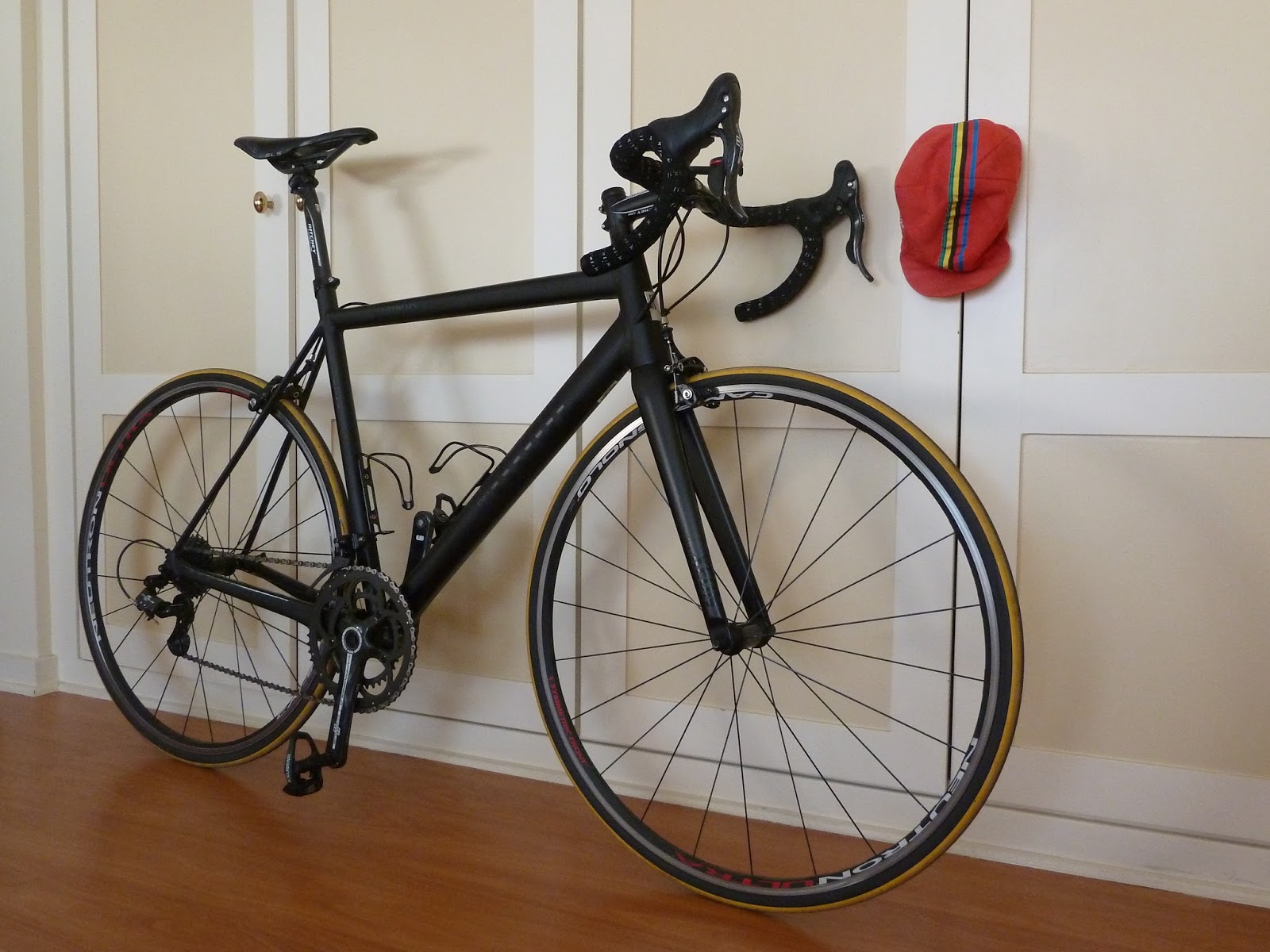
The RS is a ‘modern’ (I will explain my interpretation of this soon) aluminium frame road bike, with the ubiquitous, these days, carbon fibre fork. My one is a 2014 model, which rather confusingly means it was released around September 2013 (thank you bicycling industry for all your bullshit marketing tricks). My RS 5000 has been in my possession since around May 2014. It is equipped with a 2013 Campagnolo Chorous 11 Speed groupset. The various other bits and pieces will be looked at in due course.


I came across Rose by chance, around eight years ago when an internet search for a specific cyclo-computer component suggested that the company has the cheapest price, even after adding the postage cost. As keen as any cyclist is for a bargain, I trusted this company with my credit card details and sure enough I had my cyclo-computer part a couple of days later.
Subscrever:
Mensagens (Atom)